Introduction
In recent years, Artificial Intelligence (AI) has become a cornerstone of technological advancement, driving innovation across industries. One of the most powerful tools within AI is the concept of AI agents. These autonomous systems, which can make decisions, solve problems, and interact with environments, are becoming increasingly crucial in the enterprise world. The term “AI agents” encompasses a wide variety of systems designed to perform specific tasks in various domains, and their role in business is set to transform how companies operate. In this article, we will explore the different types of AI agents, including agentic AI, knowledge-based agents, goal-based agents, and more. We will also discuss vertical AI agents, their applications, market trends, and real-world examples.
What are AI Agents?
AI agents are software entities that can act autonomously to perform specific tasks or functions. These agents are typically designed to simulate human behavior and make decisions based on a set of predefined rules or learned patterns. AI agents can interact with their environment, perceive changes, and take actions based on their objectives or goals. They can be deployed in various industries, including finance, healthcare, manufacturing, and customer service, to automate processes and improve efficiency.
AI agents are often categorized based on their functionality, complexity, and the tasks they perform. Some common classifications include agentic AI, knowledge-based agents, goal-based agents, and model-based agents.
Agentic AI: The Next Step in Autonomous Systems
Agentic AI refers to a category of AI that not only performs tasks but also demonstrates the ability to make decisions autonomously. Unlike traditional AI systems that require constant human supervision or intervention, agentic AI can operate independently, adapting to new situations and making decisions without human input. This kind of AI is typically found in applications such as autonomous vehicles, advanced robotics, and intelligent virtual assistants.
Agentic AI systems often use machine learning and reinforcement learning techniques to improve their decision-making processes over time. They are able to learn from their environment, observe patterns, and adjust their actions based on feedback or changing conditions.
For example, in the finance sector, agentic AI can analyze market trends, make investment decisions, and optimize portfolios without human intervention. Similarly, in the manufacturing industry, agentic AI can manage production lines, monitor equipment performance, and predict maintenance needs.
Types of AI Agents
AI agents come in various types, each designed to perform specific functions depending on the requirements of the task at hand. Here are some of the most common types of AI agents:
- Simple Reflex Agents: These agents react to the current state of the environment without considering past actions or states. They are typically rule-based and perform tasks based on predefined conditions. Simple reflex agents are ideal for tasks that involve straightforward decision-making, such as sorting items in a warehouse.
- Model-Based Agents: These agents maintain an internal model of the world, which helps them track the state of the environment over time. Model-based agents can make decisions based on both the current state and their understanding of the past. A model-based agent in AI example could be a robot vacuum cleaner that maps the layout of a room and adjusts its cleaning path based on obstacles or areas that need more attention.
- Goal-Based Agents: As the name suggests, goal-based agents are designed to achieve specific objectives. They analyze the environment, plan a series of actions, and take steps to reach their goals. For example, in the AI-driven finance industry, goal-based agents can be used to optimize investment strategies or help businesses achieve specific financial targets by analyzing data and making predictions.
- Utility-Based Agents: These agents maximize their performance by selecting actions that maximize a utility function. They are useful in situations where a set of possible actions can lead to different outcomes with varying levels of desirability. Utility-based agents are used in complex decision-making tasks, such as supply chain management and resource allocation.
- Learning Agents: These agents are capable of improving their performance over time by learning from experiences and adapting to new situations. Through machine learning algorithms, learning agents can refine their strategies to better achieve their goals. They are widely used in dynamic environments where continuous improvement is required, such as customer service chatbots or recommendation systems.
Each of these agent types has distinct advantages and limitations depending on the context in which they are deployed. For instance, while simple reflex agents are fast and efficient, they may not be suitable for tasks that require complex decision-making or long-term planning. On the other hand, goal-based and utility-based agents are more suited for complex tasks but require more computational resources.
Vertical AI Agents: What Are They?
Vertical AI agents refer to AI systems that are specifically designed to address the unique challenges and needs of a particular industry or sector. Unlike general-purpose AI agents, vertical AI agents are tailored to work within a specific vertical market, such as healthcare, finance, or retail. These agents leverage domain-specific knowledge and tools to optimize processes, solve problems, and deliver value within the targeted industry.
Types of Vertical AI Agents
Vertical AI agents are specialized systems tailored to meet the needs of specific industries. These agents bring precision, efficiency, and innovation to various sectors by leveraging agent-based AI technologies. Below, we explore different types of vertical AI agents and their applications, highlighting how they enhance operations and decision-making across industries.
Healthcare AI Agents
Healthcare is undergoing a significant transformation with the integration of AI agents. These systems analyze medical data, assist in diagnostics, and recommend personalized treatment options.
- Key Applications:
- AI-powered diagnostic tools that detect diseases like cancer in early stages.
- Virtual health assistants that provide real-time support to patients.
- Drug discovery agents that accelerate the development of new medications.
- Benefits:
- Improved patient outcomes through precise and timely diagnostics.
- Cost savings by automating repetitive tasks like medical imaging analysis.
Examples: IBM Watson Health and AI-driven radiology systems.
Finance AI Agents
In the financial sector, AI agents for finance are revolutionizing operations by automating complex processes, enhancing decision-making, and ensuring security.
- Key Applications:
- Robo-advisors that personalize investment strategies based on individual goals.
- Algorithmic trading agents that execute high-speed transactions by analyzing real-time market data.
- Fraud detection systems that monitor transactions for anomalies.
- Benefits:
- Increased efficiency in managing portfolios and trading activities.
- Enhanced fraud prevention through pattern recognition and anomaly detection.
Examples: Wealthfront (robo-advisors) and PayPal’s fraud detection algorithms.
Retail AI Agents
Retailers are leveraging goal-based agents in AI to create more engaging and efficient shopping experiences. These agents predict consumer behavior, manage inventory, and personalize interactions.
- Key Applications:
- Virtual shopping assistants that recommend products based on customer preferences.
- Demand forecasting systems that help retailers stock the right products at the right time.
- AI-driven pricing strategies that optimize sales and revenue.
- Benefits:
- Enhanced customer satisfaction through tailored experiences.
- Reduced operational costs by optimizing inventory and logistics.
Examples: Amazon’s recommendation engine and Zara’s AI-powered inventory system.
Manufacturing AI Agents
Manufacturing has embraced model-based agents in AI to streamline operations, reduce downtime, and enhance productivity. These agents use historical and real-time data to make decisions that improve production efficiency.
- Key Applications:
- Predictive maintenance agents that monitor equipment health and prevent failures.
- Autonomous robots that handle repetitive tasks like assembly or packaging.
- Supply chain optimization systems that ensure seamless production cycles.
- Benefits:
- Increased uptime by addressing potential equipment issues proactively.
- Higher production rates with fewer errors.
Examples: Siemens’ AI-based maintenance systems and Tesla’s factory robots.
Emerging Vertical AI Agents
- Energy Sector AI Agents:
- Applications: Smart grid management, renewable energy optimization, and energy consumption analytics.
- Example: AI systems managing energy distribution during peak demand.
- Education AI Agents:
- Applications: Personalized learning platforms, AI tutors, and automated grading systems.
- Example: Duolingo’s adaptive learning agent.
- Agriculture AI Agents:
- Applications: Crop monitoring, pest detection, and yield prediction.
- Example: Drones powered by AI analyzing soil and weather conditions.
Market Size of Vertical AI Agents
The market for vertical AI agents is rapidly growing. According to a report by MarketsandMarkets, the global AI market in industries such as healthcare, finance, and manufacturing is expected to reach over $190 billion by 2025, with a significant portion driven by vertical AI applications. As industries continue to embrace digital transformation, the demand for specialized AI agents tailored to specific business functions will continue to rise.
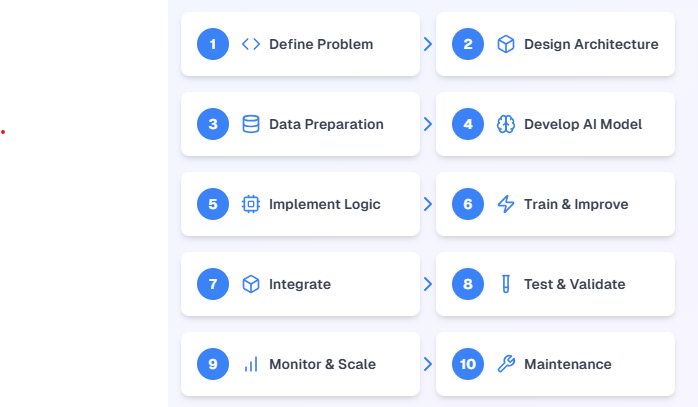
RoadMap
Case Study: SAPIDBLUE’s Knowledge-Based AI Agent for Real-Time Document Analysis and Complex Conversations
A knowledge-based agent is an AI system that leverages vast amounts of structured and unstructured data to make informed decisions. These agents are equipped with a knowledge base—a repository of facts, rules, and heuristics—that they use to reason and solve problems. The knowledge base is often updated over time through learning algorithms or human input.
Knowledge-based agents are commonly used in fields where decision-making relies heavily on expertise, such as healthcare, legal services, and customer support. For instance:
SapidBlue developed an advanced knowledge-based AI agent capable of analyzing 300+ page documents instantly and enabling real-time, complex conversations. Designed to enhance decision-making and operational efficiency, this AI solution leverages a comprehensive knowledge base to solve problems, answer domain-specific questions, and streamline workflows in industries such as legal and compliance.
Solution
The AI agent is equipped with a robust knowledge base that contains both structured and unstructured data—legal documents, industry regulations, expert knowledge, and case studies. Key features include:
- Instant Document Analysis: The AI processes lengthy documents in seconds, extracting relevant insights for quick decision-making.
- Real-Time Conversations: It enables users to engage in multi-turn dialogues, answering complex questions with contextual understanding.
- Continuous Learning: The system learns from new data, improving its knowledge base and performance over time.
- Advanced Reasoning: Using rule-based systems and heuristics, the AI provides in-depth explanations and recommendations.
Implementation
SapidBlue’s development process included:
- Knowledge Base Development: Curating a specialized knowledge base tailored to the client’s industry.
- NLP and Machine Learning Integration: Training the AI to understand and process complex documents and conversations.
- Conversational Interface: Creating a user-friendly interface for seamless interaction with the AI.
- Testing & Deployment: Rigorous testing to ensure accuracy and integration with existing workflows.
Results
- Time Savings: Document analysis that once took hours is now completed in seconds, improving efficiency.
- Improved Decision-Making: Real-time access to up-to-date, relevant insights allows faster and more informed decisions.
- Enhanced Client Support: Instant answers to legal and compliance queries have transformed customer service, leading to faster response times.
- Continuous Improvement: The AI’s ability to learn and adapt ensures ongoing performance enhancements.
What are AI Agents are Composed Of?
AI agents are composed of several key components that enable them to function autonomously:
To interact with Virtual Environment:
- Reasoning and Decision-Making: AI agents use algorithms and models to make decisions based on the data they collect. This is often achieved through techniques like machine learning, reinforcement learning, or expert systems.
- Learning Mechanisms: Many AI agents are designed to improve over time through learning. This allows them to adapt to new situations and optimize their performance.
- Communication: Some AI agents communicate with other agents or external systems to share information or collaborate on tasks.
To interact with Physical Environment:
- Sensors: These allow the agent to perceive its environment by collecting data from the surroundings. In a self-driving car, for example, sensors like cameras, LiDAR, and GPS help the car detect obstacles and navigate the road.
- Actuators: These enable the agent to take action based on the information it receives. In robotics, actuators control the movement of the robot’s limbs or wheels.
Conclusion
AI agents are set to play a transformative role in enterprises across various industries. From goal-based agents that help companies achieve their objectives to model-based agents that adapt and improve over time, the diversity of AI agents offers countless opportunities for businesses to optimize operations, reduce costs, and enhance customer experiences. Vertical AI agents, tailored to specific industries such as healthcare, finance, and retail, represent a growing market that is poised to revolutionize these sectors. As the technology behind AI agents continues to evolve, businesses that embrace these intelligent systems will gain a competitive edge in an increasingly automated world.