
Artificial Intelligence is no longer a distant innovation. Across industries, organizations are actively exploring how AI can improve operations, enable better decision-making, and unlock new business opportunities.
To understand how organizations are progressing on this journey, we conducted a short survey with booth visitors at the AI Impact Summit 2026. The survey captured perspectives from 50 industry professionals, including decision-makers, technical evaluators, and AI practitioners.
The goal was simple: understand where organizations stand today in their AI journey, what they want to achieve, and what is slowing them down.
The results reveal an interesting picture of AI ambition versus AI execution.
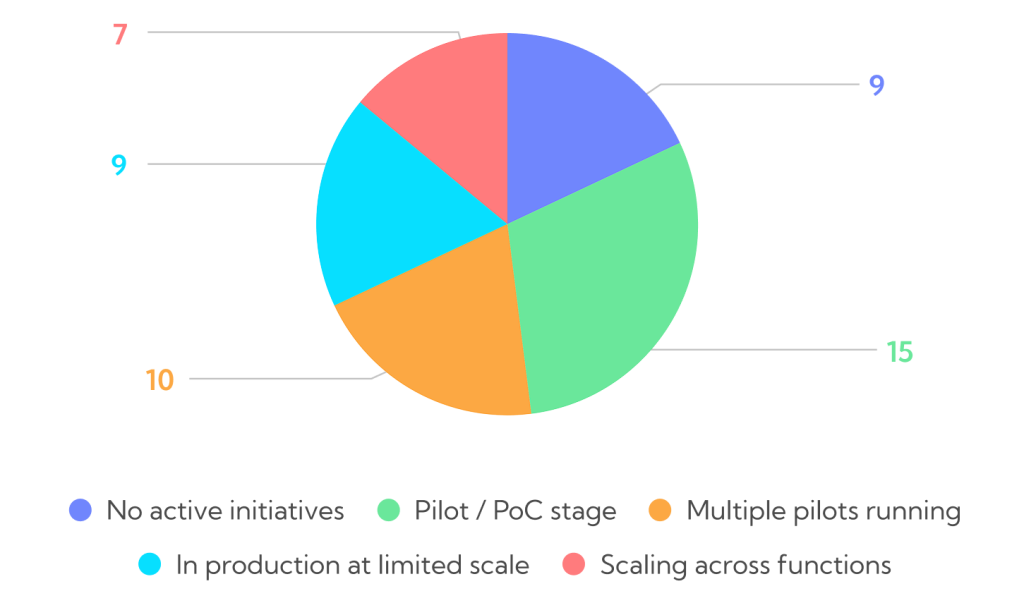
Where Organizations Stand in Their AI Journey
AI adoption is clearly underway, but most organizations are still navigating the early stages of implementation.
A large portion of respondents indicated that their organizations are currently in pilot or proof-of-concept stages, while others have moved into limited production environments.
Only a smaller percentage reported that AI is scaling across multiple functions within their organization.
This suggests that while AI experimentation is widespread, enterprise-wide AI deployment is still evolving.
Many companies are testing use cases, validating value, and building internal capabilities before committing to broader AI adoption.
What Organizations are Trying to Achieve with AI
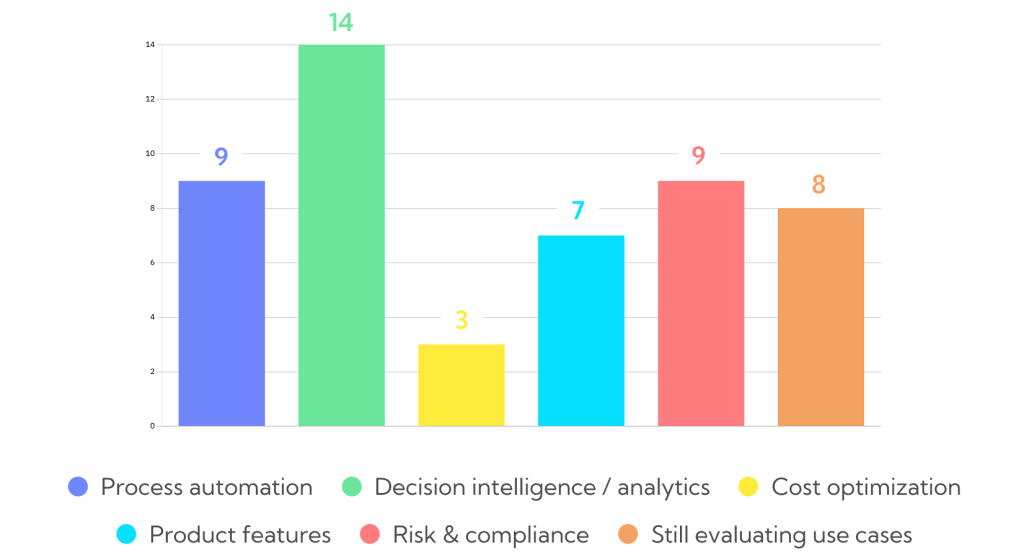
When asked about their primary AI objectives, the responses highlight a strong focus on operational improvements and smarter decision-making.
Key objectives include:
- Decision intelligence and analytics
- Process automation
- Risk and compliance management
- Enhancing product features with AI
Interestingly, a number of respondents indicated that their organizations are still evaluating potential AI use cases, suggesting that many companies are still exploring where AI can create the most value.
This reflects a broader industry trend where AI adoption is often driven by specific business problems rather than technology experimentation alone.
What is Slowing AI Adoption
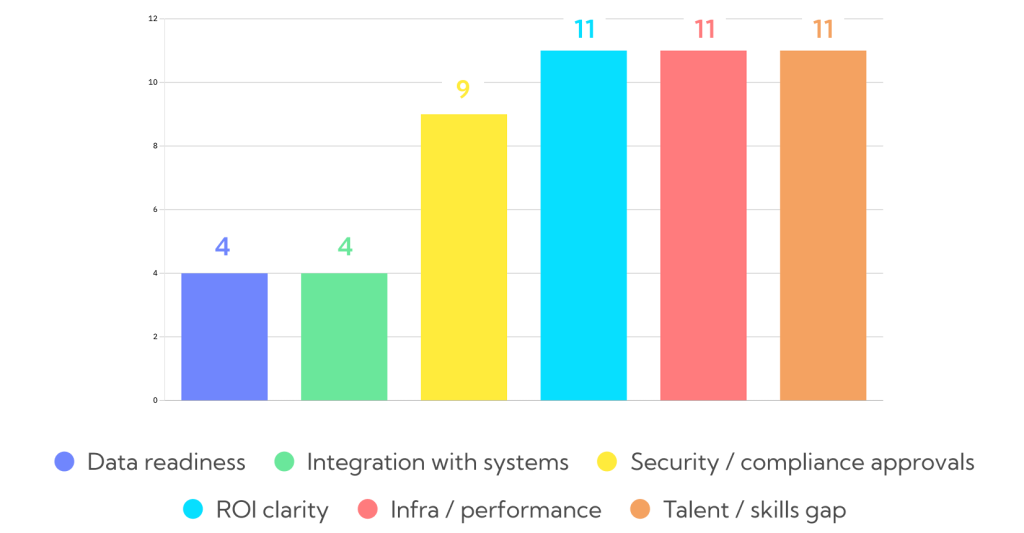
Despite the growing interest in AI, several barriers continue to slow down large-scale implementation.
The most common challenges identified in the survey include:
- Infrastructure and performance limitations
- Uncertainty around ROI and measurable value
- Talent and skill gaps
- Security and compliance requirements
These findings highlight a key reality of enterprise AI adoption: success depends not only on algorithms but also on data infrastructure, governance, and organizational readiness.
Many organizations struggle to move beyond pilot stages because scaling AI requires robust data pipelines, integration with existing systems, and clear performance metrics.
Data Readiness for AI at Scale
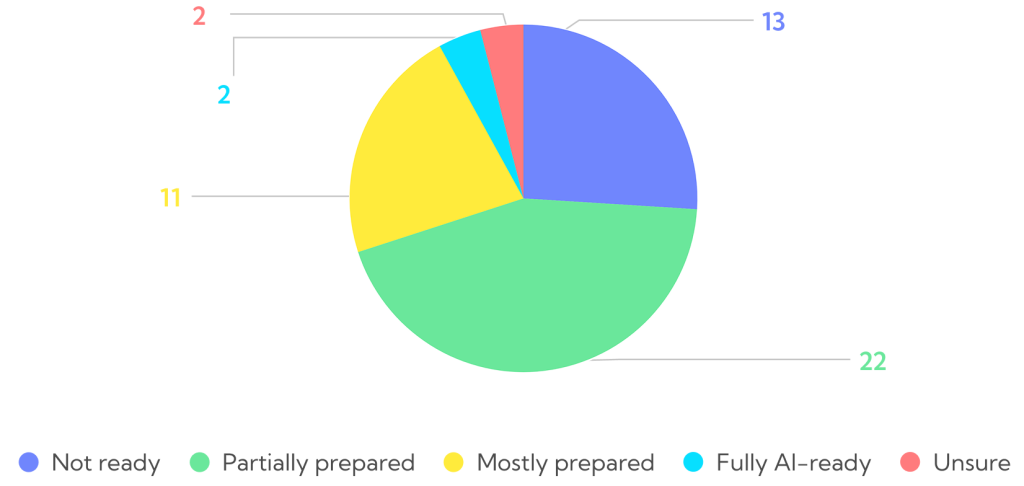
One of the most revealing insights from the survey was related to data infrastructure readiness.
A majority of respondents reported that their organizations are either not fully prepared or only partially prepared to support AI initiatives at scale.
Only a small percentage indicated that their data infrastructure is fully AI-ready.
This finding reinforces an important point: data readiness is often the foundation of successful AI adoption.
Without clean, accessible, and well-structured data, even the most advanced AI models struggle to deliver meaningful business outcomes.
How Organizations Measure AI Success
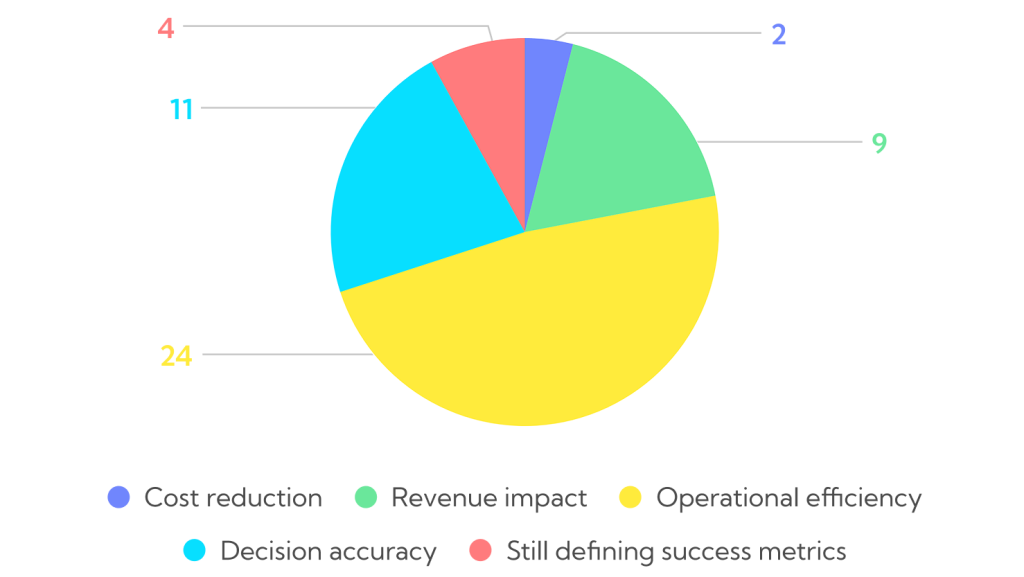
When it comes to measuring the success of AI initiatives, operational efficiency emerged as the most common metric.
Organizations are looking at AI as a way to:
- Improve productivity
- Automate repetitive tasks
- Reduce manual effort
- Enhance decision-making accuracy
Some organizations also measure AI impact through revenue growth or decision accuracy, while a smaller segment is still defining their success metrics.
This reflects the evolving nature of AI adoption, where organizations are still learning how to quantify the value generated by AI initiatives.
How Organizations are Building AI Solutions
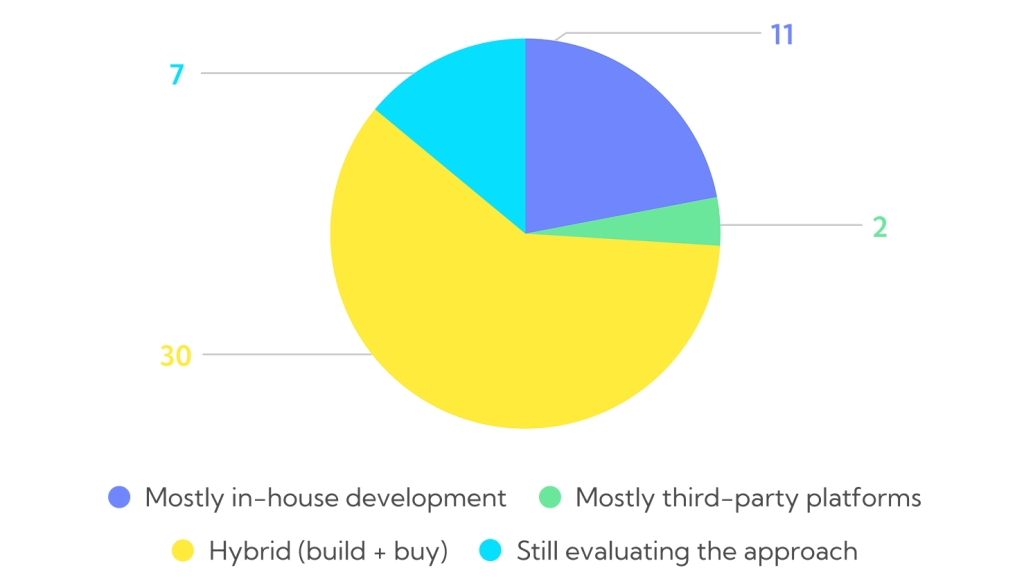
The survey also explored how organizations approach AI development.
The most common approach is a hybrid model, combining in-house development with third-party platforms.
This strategy allows organizations to:
- Maintain control over core capabilities
- Accelerate development using existing platforms
- Integrate AI solutions into their existing technology stack
Purely third-party approaches were less common, suggesting that many organizations prefer a balance between customization and speed.
Expected Timeline for AI Deployment
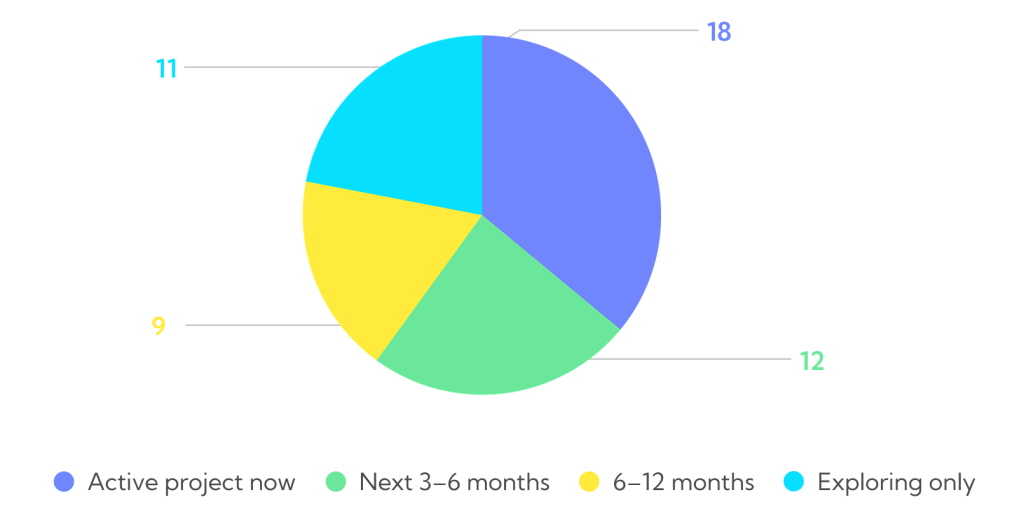
Another interesting insight relates to AI deployment timelines.
A significant number of organizations reported having active AI projects already underway, while others expect implementation within the next three to twelve months.
At the same time, some organizations are still in the exploration phase, assessing potential use cases before committing to development.
This indicates that while AI adoption is accelerating, organizations are progressing at different speeds depending on their industry, data maturity, and internal capabilities.
About the Survey Respondents
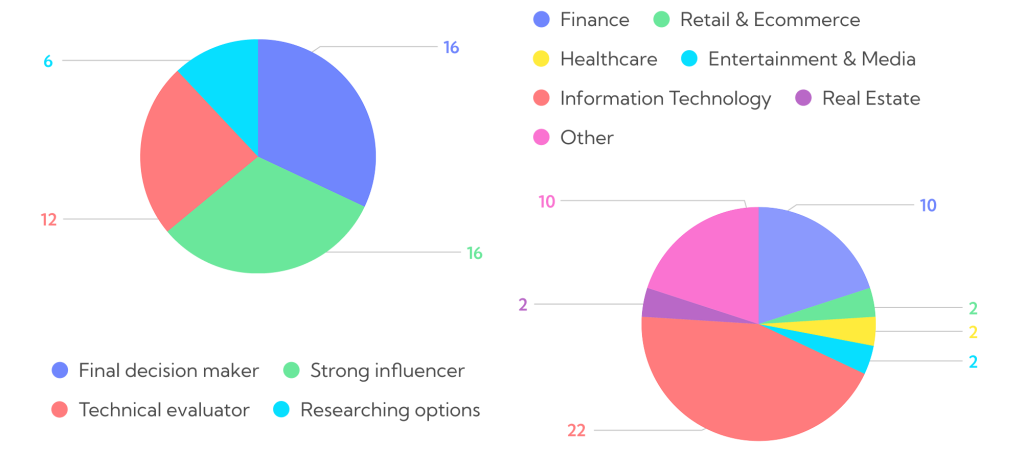
The survey responses came from professionals across a variety of industries, company sizes, and roles involved in AI initiatives.
Industries represented include:
- Information Technology
- Finance
- Retail and Ecommerce
- Healthcare
- Entertainment and Media
- Real Estate
The majority of respondents came from technology-focused organizations, reflecting the strong role that the tech sector continues to play in driving AI innovation and experimentation.
Company size
Respondents represented a mix of organizations ranging from early-stage startups and small teams to larger enterprises, providing a diverse view of how AI adoption varies across company sizes.
Roles in AI decision-making
Participants also represented different levels of involvement in AI initiatives, including:
- Final decision-makers
- Strong influencers in AI strategy
- Technical evaluators
- Professionals researching AI solutions
This mix of roles provides insight not only into organizational AI adoption, but also into how AI decisions are evaluated and implemented across different levels within a company.
Bridging the AI Execution Gap
The insights from the AI Impact Summit reveal a consistent pattern.
Organizations are increasingly interested in AI, but many are still working to move from experimentation to scalable implementation.
The journey from AI pilots to enterprise-scale deployment requires more than technology alone. It requires the right data architecture, development approach, and integration strategy.
At SapidBlue, we help organizations navigate this transition by designing and building scalable AI solutions that align with real business objectives.
Our work focuses on:-
- AI strategy and architecture
- Custom AI application development
- Data readiness and integration
- Enterprise AI implementation
AI Adoption Insights Infographic
Below is a visual summary of the insights gathered from our survey at the AI Impact Summit 2026.