
 Contact Us
Summary: AI is transforming cyber risk management by helping businesses detect threats faster, automate security operations, and improve compliance. Unlike traditional cybersecurity methods, AI continuously monitors networks, identifies unusual activity, prioritizes critical risks, and responds to threats in real time. As cyberattacks become more advanced, AI enables organizations to strengthen their security, reduce human error, and stay ahead of evolving threats. By adopting AI-powered cybersecurity solutions, businesses can protect their digital assets, improve operational efficiency, and build a more resilient security framework for the future.
Introduction
Cybersecurity is now a business priority, not just an IT responsibility. Cyberattacks cost businesses $12.5 billion in 2023, and threats like ransomware, phishing, and data breaches continue to grow. To stay protected, organizations need faster and smarter ways to identify and respond to risks.
Traditional security methods, such as manual log reviews, spreadsheets, and periodic audits, are no longer sufficient to keep pace with ever-evolving cyber threats. AI-powered cybersecurity helps businesses detect threats earlier, respond more quickly, and strengthen their security before attacks can cause serious damage.
In this guide, we’ll explain how AI is changing enterprise risk management, the benefits it offers, real-world use cases, and the best practices for adopting AI securely and effectively.
What Is AI-Driven Cyber Risk Management?
AI-driven cyber risk management uses artificial intelligence, machine learning, and automation to identify, assess, and respond to cyber threats faster and more accurately than traditional methods.
In simple terms, it helps businesses:
- Continuously detect risks by monitoring network traffic, system logs, user activity, and transactions in real time.
- Prioritize threats by severity so security teams can focus on the most critical issues first.
- Respond faster by automating security actions and stopping threats before they become major incidents.
Instead of relying on security teams to manually review thousands of alerts, AI analyzes large amounts of data, highlights the most important risks, and continuously improves as it learns from new threats.
Understanding the Use of AI for Digital Products
AI for digital product’s potential is not just limited to threat detection but can also automate routine repetitive tasks like network traffic checks, weaknesses detection, vulnerability detection, real-world use case generation, and automation of fixes allowing cyber security teams to focus on bigger problems leading to increased operational efficiency and, helping businesses to formulate better-informed decisions and improved security measures.
As cyber risks grow, using AI to handle them becomes a must for businesses so In this post, we’ll look at how AI is transforming cybersecurity and helping companies stay safe in an increasingly connected world.
Market Statistics for Small Enterprises
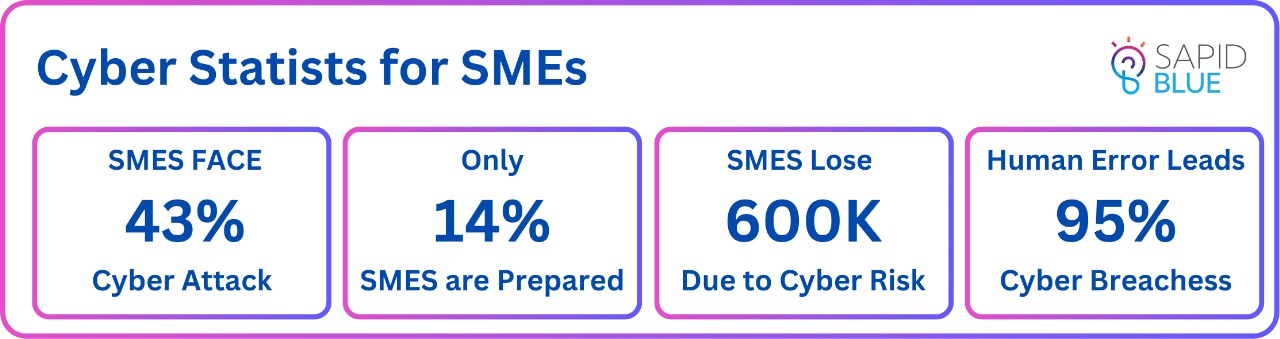
Small and mid-sized businesses are increasingly being targeted by attackers. The latest 2026 data highlight the growing risks they face.
| Statistic | What It Means for Your Business |
| 43% of cyberattacks target small businesses | smaller businesses are often targeted because they are seen as having weaker security. |
| Only 14% of small businesses feel prepared to defend against an attack | Many organizations are not fully prepared for today’s cyber threats. |
| Losses range from $826 to $653,587 per incident | The financial impact varies, but even smaller incidents can disrupt business operations and cash flow. |
| 95% of breaches trace back to human error | Technology alone isn’t the weak point – process and awareness gaps are. |
One statistic stands out: most security breaches begin with human error. A clicked phishing link, a weak password, or a missed software update can quickly become a serious security incident. AI can’t prevent every mistake, but it can detect and respond to threats early before they cause significant damage.
Why Traditional Risk Management Falls Short?
Many organizations still rely on traditional cybersecurity methods that were designed for a very different threat landscape. As cyber threats become more advanced and frequent, these approaches are no longer enough to keep businesses protected.
- Slow threat detection: Manual reviews often identify threats only after damage has already occurred.
- Disconnected systems: Security, IT, and compliance teams may work with separate tools, making it difficult to get a complete view of business risks.
- Rapidly evolving threats: Modern attacks change quickly, making it hard for periodic assessments to keep up.
- Growing compliance requirements: Keeping up with changing regulations and industry standards through manual processes is becoming increasingly difficult.
These challenges are driving more organizations to adopt AI-powered cybersecurity. By providing real-time visibility, faster threat detection, and automated risk management, AI helps businesses strengthen their security and respond to threats more effectively.
How AI Enterprise Software Strengthens Cybersecurity?
AI-powered cybersecurity uses machine learning, natural language processing (NLP), and automation to analyze large volumes of security data more quickly and accurately than traditional methods. Here’s how it helps businesses strengthen their security.
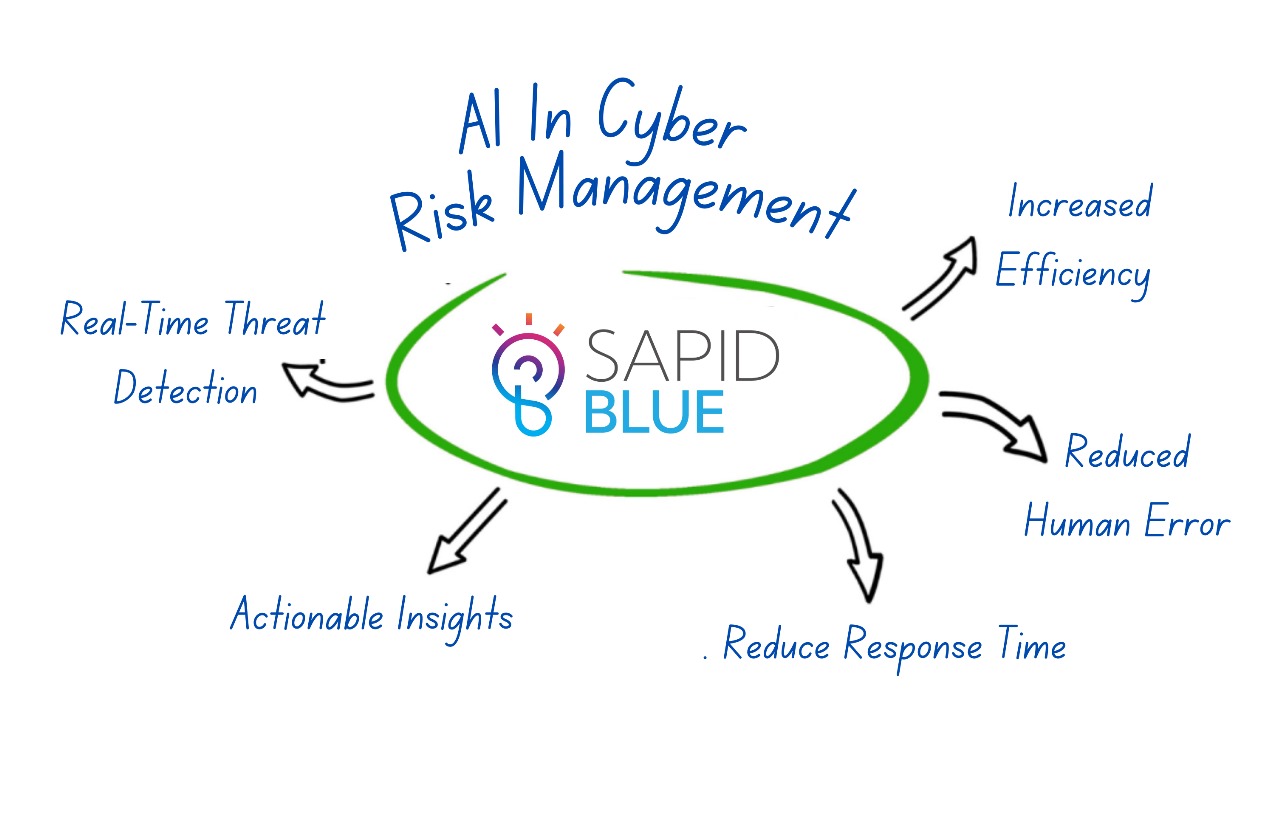
- Real-time threat detection: Monitor network activity, transactions, and system logs to detect suspicious behavior.
- Predictive risk analysis: Learn normal system behavior, detect unusual activity, and identify potential risks before they become security incidents.
- Automated incident response: Automatically block malicious activity, isolate affected devices, or stop suspicious transactions within seconds.
- Reduced human error: Automate routine security tasks to minimize mistakes and strengthen overall security.
- Smarter security operations: Prioritize the most critical threats, enabling security teams to focus on high-value investigations rather than reviewing thousands of alerts.
Together, these capabilities help organizations move from reactive security to a proactive, AI-driven approach that improves threat detection, accelerates response times, and strengthens overall cyber resilience.
AI in Regulatory Compliance and Governance
Compliance is an important part of enterprise risk management, but keeping up with changing regulations can be challenging. AI helps simplify compliance by automating monitoring, improving visibility, and reducing manual effort.
- Continuous compliance monitoring: Track changes across regulations such as GDPR, the EU AI Act, and industry standards to identify compliance gaps early.
- Automated audit trails: Record system activities and decisions automatically, making it easier to prepare for audits and maintain compliance throughout the year.
- Explainable AI decisions: Provide clear, transparent reasons behind AI-driven risk assessments to support regulatory requirements and build trust.
By automating compliance processes, AI helps organizations reduce risk, stay aligned with evolving regulations, and build confidence with customers, partners, and regulators.
Real-World Use Cases: Use of AI in Cyber Risk Management
1. DarkTrace: AI-Powered Intrusion Detection
Challenge: An advanced persistent threat (APT) targeted a law firm to steal sensitive data, cleverly bypassing conventional security measures by mimicking normal user behavior and exploiting legitimate credentials. This type of threat is very hard to detect because it doesn’t exhibit the typical patterns of malicious activity that traditional security systems are designed to detect.
Solution: Building an Enterprise Immune System that continuously learns from what constitutes normal behavior within an organization’s network. Enabling them to detect undefined and unstructured patterns in real time. In this case, AI detected the abnormal use of legitimate credentials, recognizing it as a potential threat. Thus enterprise Immune System immediately took action and stopped the attack in its early stages, so no sensitive data was exploited, all without relying on traditional security rules.
Impact: This AI-based cybersecurity system detected the threat at an early stage, preventing significant damage. Reducing the firm’s response time and mitigating the potential for a costly breach.
- AI is an important part of managing cybersecurity risks. It looks at large amounts of data to spot risks and weaknesses, allowing companies to take steps to reduce them.
- AI-based cybersecurity can also help predict and rank threats, making it easier for businesses to focus on the most important ones and use their resources wisely.
Cybersecurity risk management is about finding, evaluating, and handling risks from cyber threats. AI can change this process by automating risk assessments and responses to incidents. When businesses use AI in cyber risk management, they can detect and respond to threats faster and more effectively, helping to create a safer environment.
2. Google: AI for Phishing Detection
Challenge: Gmail with a user base of millions of people has been a constant target of cyber-attacks, with phishing being the major method. So, to counter this issue, Google wanted an AI-driven algorithm that could identify and examine suspicious emails.
Solution: A model that could block more than 100 million phishing emails daily based on factors like email content, patterns created, and sender reputation.
Impact: In recent research, Google reported that their AI-based cybersecurity models could help reduce phishing email exposure by over 99.9%, improving the security of millions of users. Their AI model could even identify sophisticated, targeted phishing attacks and continuously improve its detection capabilities as it processes new threats.
By integrating AI, Google has dramatically reduced phishing risks, enhancing the security of personal and corporate data for millions of users. This AI-driven protection has become a key feature of Gmail’s cybersecurity infrastructure.
The Future of AI in Cyber Risk Management
As AI technology improves, its role in managing cyber risks will grow even more and AI in cybersecurity will get even better at spotting new threats and unknown vulnerabilities. This means businesses can create smart security strategies that adapt to changing risks and help stay ahead of cybercriminals.
By using AI-based cybersecurity, companies can strengthen their defenses, protect digital assets, and keep sensitive data safe more effectively.
Conclusion
AI is changing how businesses manage cybersecurity by enabling faster threat detection, smarter risk analysis, and automated incident response. Instead of relying on manual processes, organizations can use AI to identify potential risks early, prioritize critical threats, and strengthen their overall security posture.
As cyber threats continue to evolve, adopting AI-powered cybersecurity solutions helps businesses improve resilience, simplify compliance, and protect their digital assets. By combining AI with the right security strategy, organizations can respond to threats more quickly while building a secure foundation for future growth.
Looking to strengthen your cybersecurity with AI?
Partner with SapidBlue to design and build secure, intelligent cybersecurity solutions tailored to your business. From AI-powered threat detection and security automation to enterprise-grade product development, we help organizations stay ahead of evolving cyber risks with scalable, future-ready solutions.
Accelerating Secure Digital Transformation with AI, Cybersecurity, and Emerging Technologies.